Bingo Patterns Explained: From Classic Lines to Shapes, Letters, and Blackout
- Games & Patterns
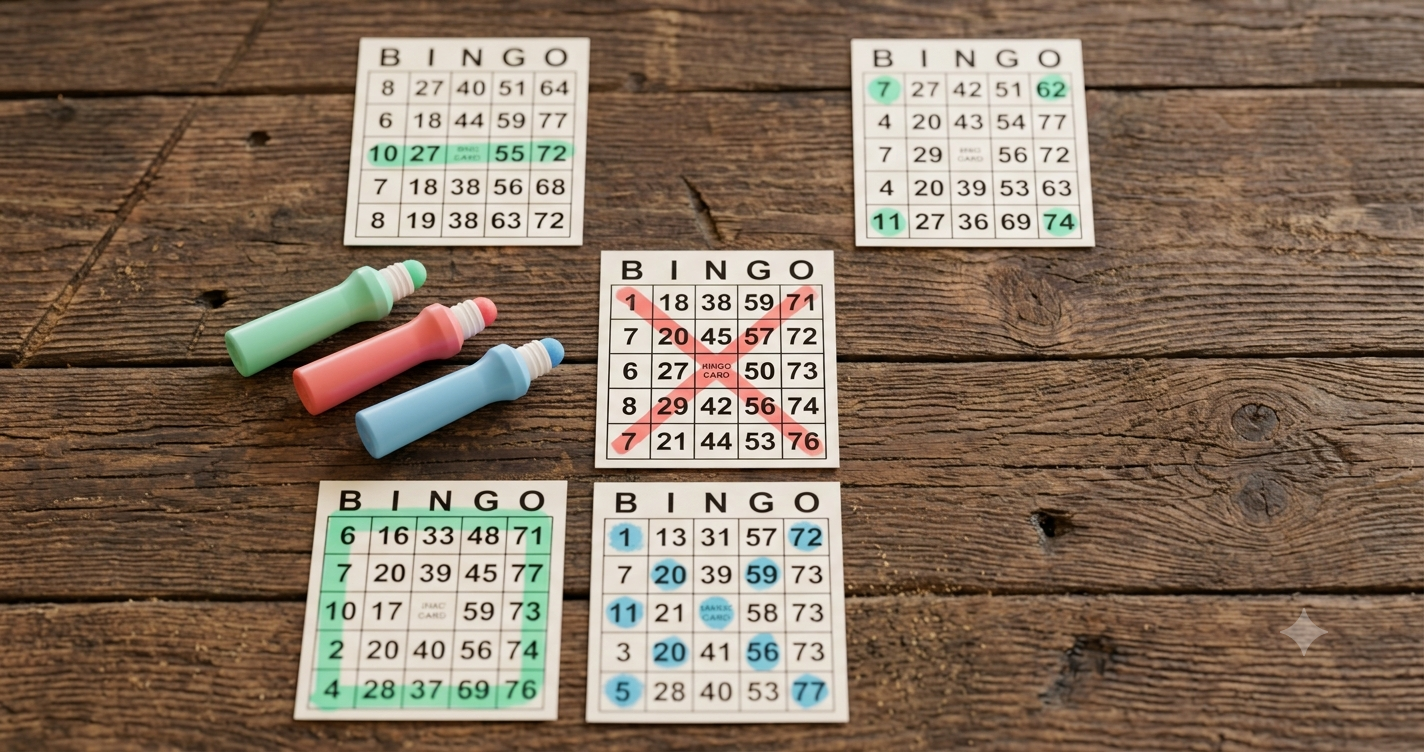
A bingo pattern is the shape a player has to cover on their card to win a game — a single straight line, the four corners, a letter, a picture, or the whole card filled in. Before each game, the host announces which pattern is in play, and the first player to complete that exact shape with called numbers wins. Change the pattern and you've changed the game: a single line ends in a couple of minutes, a blackout can run twenty. That one choice is most of what makes a night feel fast, slow, easy, or dramatic.
This guide walks through the patterns worth knowing — grouped by how they play, not just how they look — plus how to sequence them across a night, announce them so nobody's confused, and verify a win without holding up the room.
Where this comes from: Dauber HQ was built by Seth Burnett, who spent 15 years running a bingo fundraiser for Royal Family Kids, a nonprofit serving kids in the foster care system. A lot of what's below is what actually worked in the room, not just what looks good on a chart.
What is a bingo pattern, exactly?
On a standard 75-ball card, you've got a 5×5 grid — columns headed B, I, N, G, O — with a free space in the middle. A pattern is any predefined arrangement of squares on that grid. "Any one line" means a player wins by completing any horizontal, vertical, or diagonal row. "Blackout" means every square. Everything else lives between those two: corners, frames, letters, shapes, and the oddball custom patterns hosts dream up for a theme.
The free center square counts as already covered, which matters more than it sounds — any pattern that runs through the middle gets a head start. That's why a diagonal line or a letter X plays a little faster than you'd expect.
Two quick ground rules before the list. First, the host calls the pattern before the game starts — a pattern you spring on people mid-game is a good way to start an argument. Second, players still mark their own physical cards; the pattern is a shared target, and a good board or display just makes it easy for everyone to see what shape they're chasing.
The classic patterns every host should know
These are the workhorses. If you only ever used the patterns in this section, you could run bingo for years and nobody would complain.
Any one line. A single line in any direction — horizontal, vertical, or diagonal. The fastest standard game there is, and the friendliest for first-timers because there's nothing to explain. Great as an opener while latecomers are still finding seats.
Four corners. Cover the four corner squares. Fast, a little surprising, and it plays completely differently from a line, so it's a nice second game to reset the rhythm. Because it ignores the middle entirely, the free space gives no help here — pure luck of the draw.
Postage stamp. A 2×2 block of squares in one corner (the classic is the top-right, in the O column). Quick, and it introduces the idea of "a shape, not a line" without much difficulty. Some hosts run "double postage stamp" — two 2×2 blocks — for a slightly longer game.
Blackout (also called full house or coverall). Every square on the card. The longest standard game, the biggest tension, and almost always the finale. A blackout can take 45 to 55 calls to hit, so budget real time for it and put your best prize behind it. Bonus tip: sometimes you can roll from an existing game and continue the calls into a blackout. This works when you have a pattern that covers a lot of the board already.
Frame (also called picture frame or outside edge). The entire outer border of the card — the top and bottom rows plus the left and right columns. A satisfying middle-of-the-night game: long enough to build suspense, short enough that you're not there all evening.
Letter and shape patterns for variety
Once your crowd is warmed up, letters and shapes are where a night gets its personality. They take a beat longer to explain, so announce them clearly and, if you can, show the shape on a screen.
Letter T. The full top row plus the center column running down from it. Reads instantly when you show it, and plays at a comfortable medium length.
Letter X. Both diagonals crossing through the center. The free space helps here, so it moves quicker than it looks — a good "we've got fifteen minutes" game.
Letter L. The full left column plus the bottom row. Same family as the T, different feel. You can build a themed round out of a word — spell out a short word across several games, one letter per game.
Kite, arrow, and diamond. These are shape patterns — a diamond is the four "edge middle" squares plus the center; an arrow points off in a direction; a kite is a small diamond with a tail. They're crowd-pleasers precisely because they don't come up at every bingo night. Save one or two as a novelty.
Roving / crazy patterns. A "crazy" version of a pattern means it counts in any rotation — a "crazy T," for instance, wins whether the T is upright, upside down, or on its side. It's a way to make a familiar pattern last a bit longer and feel a little wilder without teaching a brand-new shape.
Quick-game patterns vs. long-game patterns
The single most useful way to think about patterns isn't by shape — it's by how long they take. Roughly:
Quick games (a few minutes, ~4 to 15 calls to a likely win): any one line, four corners, postage stamp, letter X. Use these to open, to reset energy after a lull, and to squeeze in "one more" before a break.
Medium games (five to ten minutes): letter T, letter L, frame, small shapes, double bingo (two lines). This is the meat of the night — enough length to build a little suspense, not so long that people drift.
Long games (ten-plus minutes, high tension): blackout, coverall variants, and large multi-part patterns. One, maybe two per night, and always for the biggest prizes. A long game with a small prize is the fastest way to lose the room.
A night that's all quick games feels frantic and cheap; a night that's all long games drags and people leave before the finale. The mix is the craft. A reliable shape: open fast, settle into mediums, break, come back with mediums building toward one long finale.
How to choose patterns for your event
A few things that actually move the needle:
Match the pattern to the prize. Effort should track reward. A blackout deserves your headline prize; a single line gets a modest one. When those line up, the room's energy tracks with the stakes, which is exactly what you want.
Read your crowd's experience level. A retirement-home group that's played weekly for years can handle crazy patterns and multi-part shapes without blinking. A one-off fundraiser full of first-timers wants lines, corners, and one fun shape — keep the cognitive load low so the fun stays high.
Vary it on purpose. Running the same pattern six times in a row is the number-one way to bore your regulars. Even a simple rotation — line, corners, stamp, T, frame, blackout — feels like a designed evening rather than a loop.
Let the room vote. Mid-session, ask which pattern they want next. It costs nothing, it gets people invested, and it tells you what your specific crowd loves so you can plan better next time.
If you want a fuller walkthrough of structuring a whole evening around these choices, our complete guide to running a bingo night covers pacing, prizes, and crowd management end to end.
Announcing and verifying patterns without slowing the room
Two moments trip hosts up: telling people the pattern, and confirming a win.
Announcing. Say the pattern, then show it. "This game is the letter T — top row and straight down the middle." If you've got a screen or a TV in the room, put the shape on it so there's no ambiguity. Confusion about the pattern is the single most common source of a disputed call, and it's entirely preventable.
Verifying. When someone calls bingo, you read their covered squares back against the numbers you've actually called. On paper, that means someone walks over and checks the card by hand while everyone waits. It works, but it's slow, and a wrong call after a long game deflates a room fast.
This is where a running record earns its keep. If every number you've called is logged automatically, verifying a claim is a glance, not a hunt — you can confirm or wave off a bingo in seconds and keep the night moving. It also settles the rare honest mistake without anyone feeling accused.
Custom patterns and themed nights
Once you're comfortable, custom patterns are how you make a night yours. A candy cane and a tree for a holiday event. A heart for a Valentine's fundraiser. A school's initials for a spirit night. A pattern shaped like the thing you're raising money for.
Custom patterns are also a practical lever: you can dial difficulty precisely. Need a game to run long for a big prize but blackout feels too punishing? Design something in between. Want a fast, festive opener? A five-square shape does it. The patterns page over on Dauber HQ's features shows how the built-in library and the pattern designer fit together.
A note on ball formats: nearly everything above assumes the 75-ball, 5×5 grid that's standard in the US. Sixty-ball bingo uses a smaller grid and a shorter pattern vocabulary, but the same logic holds — lines are quick, coverage is long, and shapes live in between. (Ninety-ball bingo, common in the UK, plays on a different card and a different rhythm entirely — one line, two lines, full house — and is its own conversation.)
A ready-to-use pattern lineup
If you want a night you can run tonight, here's a tested eight-game progression for a mixed crowd:
- Any one line — fast opener, small prize, gets everyone a win early
- Four corners — quick, different feel, resets the rhythm
- Postage stamp — first "shape," still easy
- Letter T — medium, readable, a step up
- Frame — longer, more suspense, mid-size prize
- Letter X — quick palate cleanser before the break
- Double bingo (any two lines) — medium, builds toward the finale
- Blackout — the finale, longest game, biggest prize of the night
Swap in a themed custom pattern anywhere it fits your event, and let the room vote for a "dealer's choice" game or two in the back half.
Where Dauber HQ fits
Every pattern above is a shape you can announce with a cage and a paper flashboard — patterns aren't a feature you have to buy, they're just how bingo works. Dauber HQ's free plan runs a full 60- or 75-ball game with up to 10 player viewers, and you call the win aloud, the traditional way — announce the pattern, players track it on their own card, you verify against your call log when someone shouts BINGO. Nothing above requires anything more than that.
What Plus adds is the app doing the pattern work for you. It ships with 75+ built-in winning patterns — lines, corners, shapes, letters, coverage — and a pattern designer for drawing your own when a night calls for something custom. The winning shape lights up live on the caller, the room display, and every player's phone, so nobody has to remember what they're chasing. Players still use their own physical cards either way — Dauber HQ is the display, not a replacement for the card or the cage.
Plus is $15/month or $120/year, also lifts the free plan's 10-viewer cap with no per-player fees, and adds reusable programs, timestamped CSV export, and session history that never expires; the full free-vs-Plus breakdown lives on the features page. Free forever means free forever — no trial, no expiration. And some of every dollar goes back to kids in foster care.
→ Start calling for free → · See patterns on Plus →
Picking patterns for your next event? Plus puts 75+ of them on the board automatically, plus a designer for your own. Compare plans →
Related posts
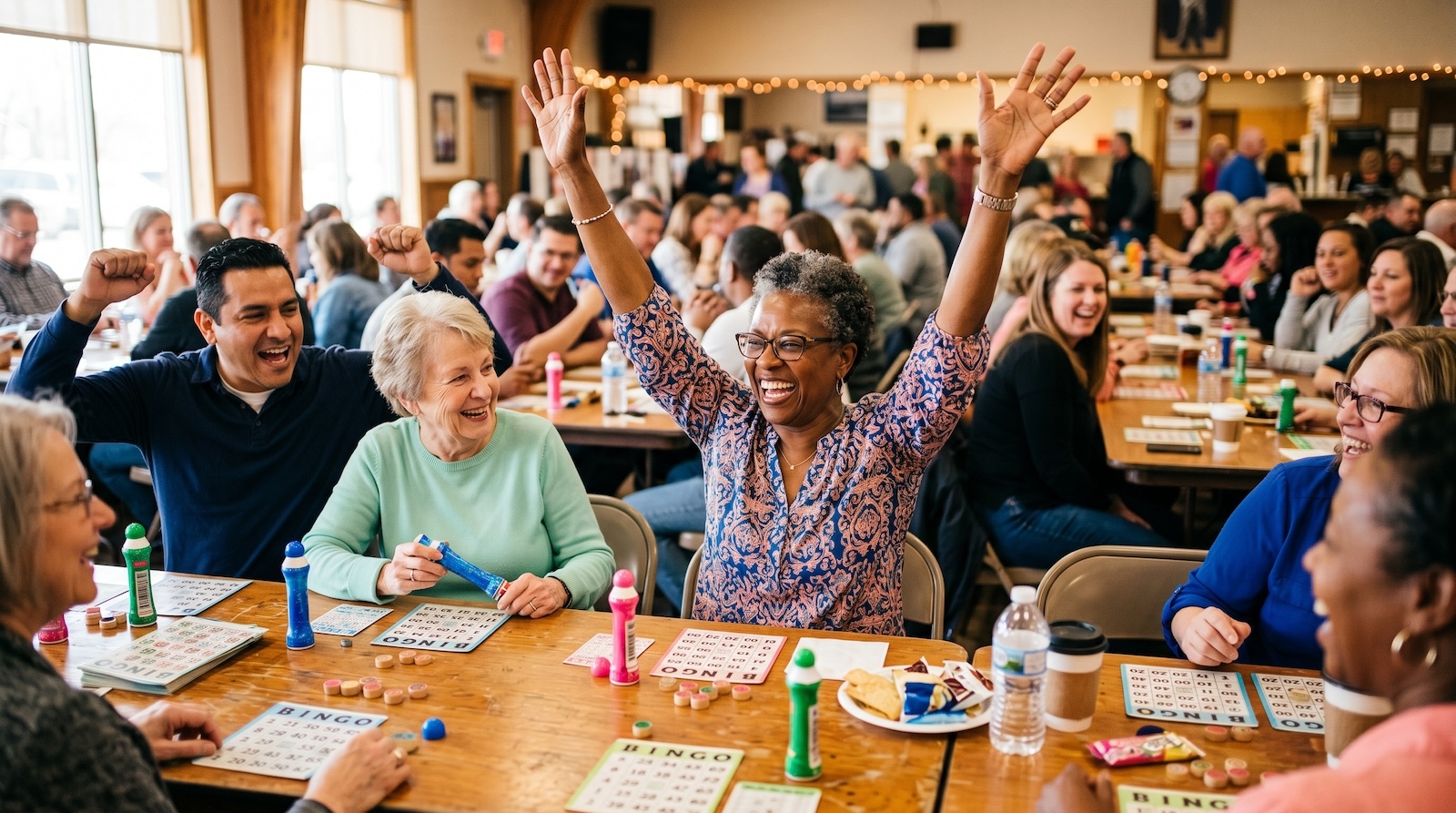
How to Start a Weekly Bingo Night at Your VFW, Legion, Elks or Moose Lodge
A practical guide to weekly bingo at your VFW post, American Legion, or lodge: supplies, volunteers, calling the numbers, and a display the whole hall can read.
- Hosting Guides
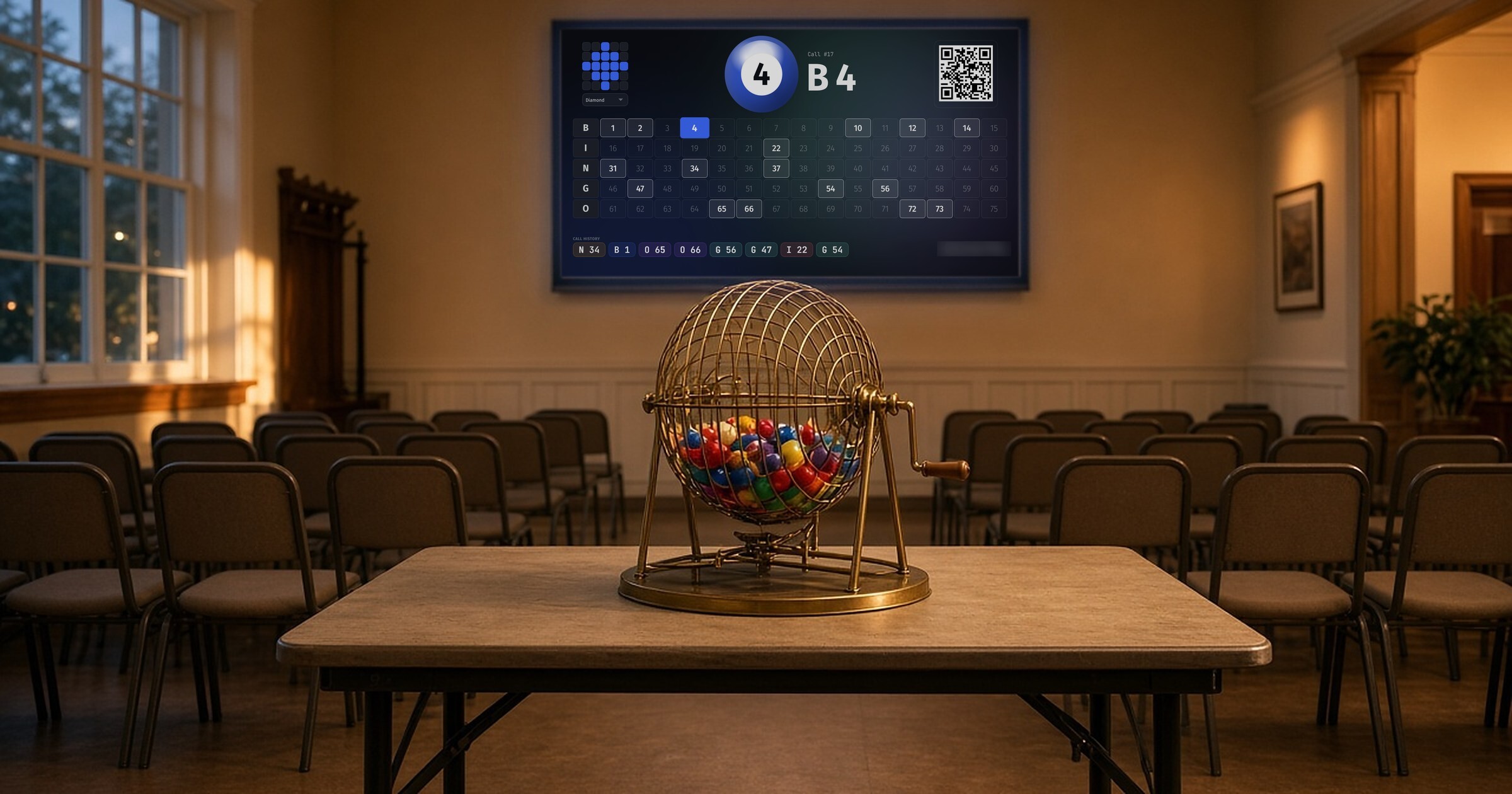
Cage or Screen? How to Run Charity Bingo With a Ball Cage and a Digital Board
Running charity bingo with a ball cage? See how to pair your cage or blower with a digital board so every player can follow each call, and what state rules say.
- Hosting Guides
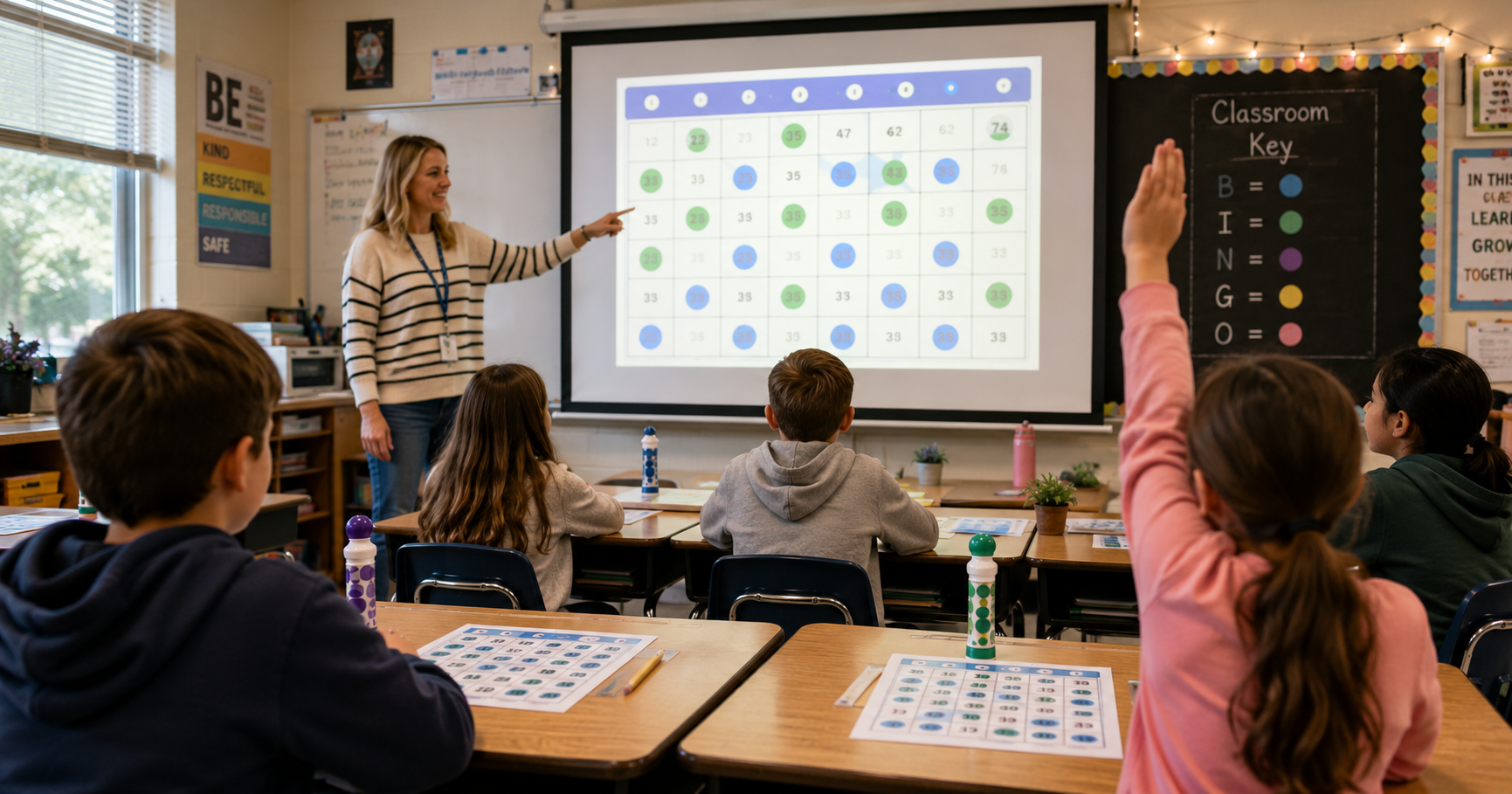
Classroom Bingo Games: A Teacher's Guide to Review That Doesn't Feel Like Review
Turn review day into a game your class actually wants to play — classroom bingo formats, free tools, and how to wire it to any subject.
- Use Cases