How to Run a Bingo Night: The Complete Guide for Community Hosts
- Hosting Guides
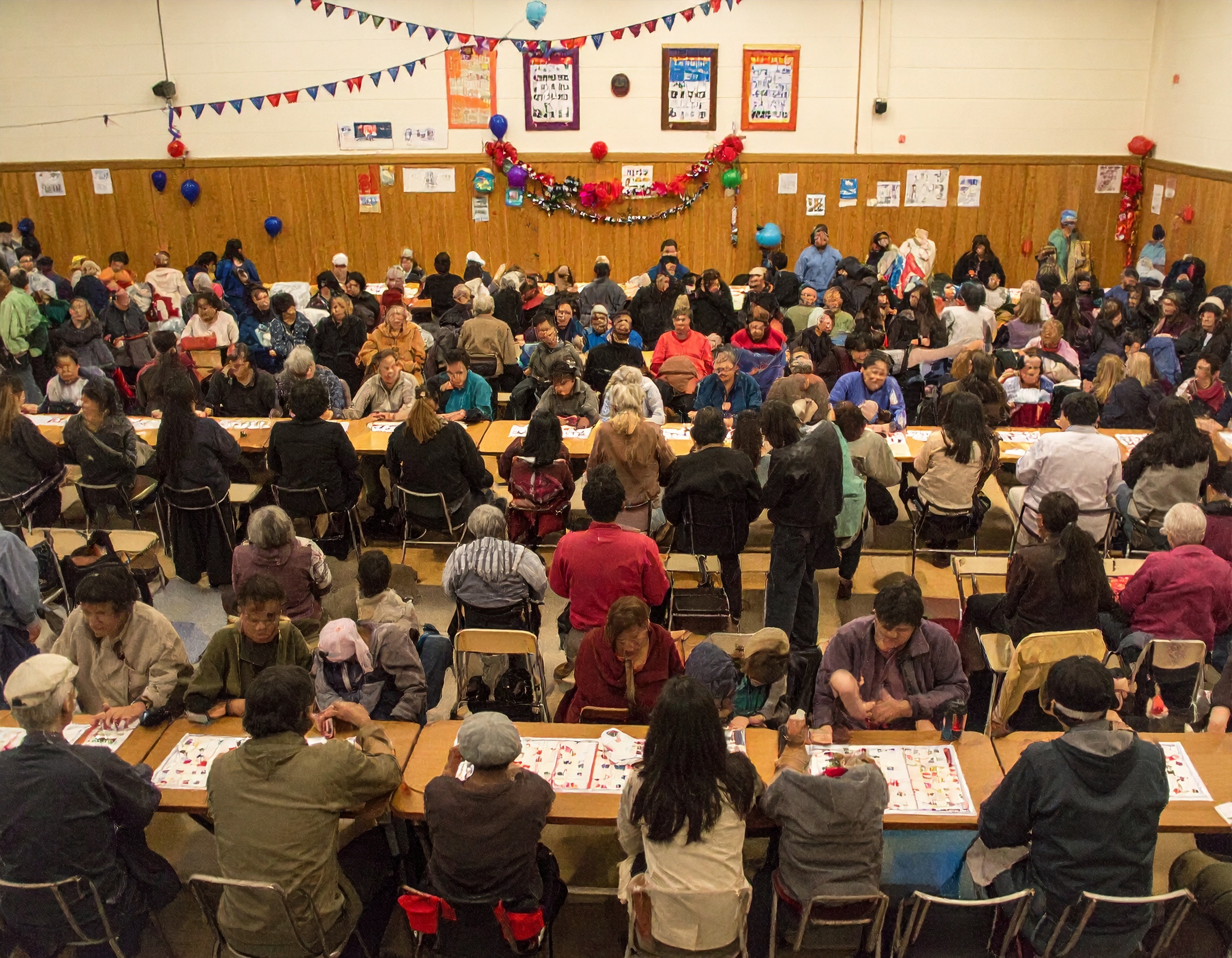
Running bingo sounds simple until you're the one doing it. You've got a room of people looking at you, a cage full of numbered balls, a stack of paper cards you hope are enough, and the persistent worry that someone in the back row can't hear a word you're saying.
This guide is for the person actually running the night — the church volunteer, the VFW post adjutant, the bar events coordinator, the charity organizer who somehow got put in charge of bingo. We'll cover everything from equipment to patterns to managing a crowd, and how modern tools have made most of the traditional headaches optional.
Before You Start: What You Actually Need
Traditional bingo setup requires a calling mechanism (cage or random number generator), a way to display called numbers, bingo cards for every player, and something to mark them with.
Modern setup — which we'll cover in detail below — uses a browser-based caller instead of a cage and lets every player follow along on their own device via a live called-numbers display. Players still use their own bingo cards; the difference is that everyone can see every call on their own screen. Both approaches work. The differences matter mostly at scale.
For a small gathering (under 20 players): Physical cards and a cage work fine. The main friction is the printing and distribution. If you're doing this more than once, a digital approach will save you time and money.
For a larger event (20+ players): Visibility and audibility become real problems fast. A digital caller with a live called-numbers display on every player's device scales much more gracefully — every player sees every call on their own screen, regardless of where they're sitting.
Choosing Your Bingo Format
Two main formats dominate community bingo in North America:
75-ball bingo: The American standard. A 5×5 grid with a free center space, letters B-I-N-G-O across the top, and numbers 1–75. Most people in the US are familiar with this format.
60-ball bingo: A 4×4 or 5×4 grid without the free center space, typically played with numbers 1–60. Less common but popular in some regions and useful for faster games.
Which to use: Unless you have a specific reason to use 60-ball, go with 75-ball. Your players will be familiar with it and you'll have fewer explanations to make before the game starts.
Setting Up Your Caller
The traditional way
A wire bingo cage with 75 numbered balls, plus a flashboard or whiteboard to display called numbers. Works for any group size. Downsides: setup and teardown time, physical space required, the caller has to have a loud and clear voice in a large room, and called numbers are easy to miss if you're not paying attention.
The digital way
A browser-based bingo caller handles number drawing (automatic or manual), displays called numbers on screen, and — if you're using a tool like Dauber HQ — puts the live called-numbers display on every player's own device so they can follow along from wherever they're sitting.
Setup for a digital session: open a browser, create a session, share the viewer link or QR code. Players scan it on their phones and the called-numbers display opens on their screen — updated live as each number is called. Takes two minutes. Players still use their own bingo cards; they just have the full call board visible on their device instead of squinting at a screen across the room.
For venues, the display screen feature — a second link the app gives you, made to pop open on a TV or projector — solves the visibility problem for larger rooms without any extra hardware. It just shows the board; calling stays on your main caller screen.
The bingo caller software landscape is worth a brief note. There are two flavors available, and both have problems. The first is the Windows 3.1 utility — gray on gray, hard beveled edges, functional but ugly enough to embarrass you in a room full of people who paid to be there. The second is the casino game in a trench coat — bright play-school colors, over-the-top animations, screaming graphics that don't belong in a church hall or a Legion post. Dauber HQ is the third option: clean, modern, built to look as good as the night you're putting on.
Picking Your Winning Pattern
The winning pattern is the shape a player needs to mark on their card to win. It's one of the most underappreciated levers in running an interesting bingo night.
Beginner patterns (fast games):
- Single line — any horizontal, vertical, or diagonal line across the card
- Four corners — all four corner squares
- Letter T or L — the top row and one vertical column
Intermediate patterns:
- Blackout / Full house — every square on the card. Long game, high tension.
- Double bingo — two complete lines
- Frame — the entire outer border of the card
Fun patterns for variety:
- Postage stamp — any 2×2 corner block
- Outside corners — the four corners plus the adjacent squares
- Letter shapes: N, X, Z, H, C — trace the letter on the card
For a fundraiser night: Start with single line or four corners (fast, keeps energy up), end the night with full house (high stakes, longer buildup, usually a bigger prize).
For a community social night: Mix it up. Post the pattern for each game on a whiteboard or show it on a display screen. Keep players guessing what's next.
Managing the Game Night
Before the first number is called
- Make sure every player has a card (physical or digital)
- Display or announce the winning pattern for the first game
- Announce the prize and any rules (is there one winner or split pot for ties?)
- Set your pace — auto-calling at a moderate interval or manual is your choice
During the game
Pace: Don't rush. Players who can't keep up get frustrated and stop playing. A common mistake is calling too fast, especially with older or less experienced players. Manual mode lets you control exactly when each number drops.
Repetition: After each call, many experienced callers repeat the number once. "B-7. B as in Bingo, 7." In a large or noisy room this helps. With digital player boards, players can also verify on their own screen, which reduces the need for you to repeat.
Managing a BINGO claim: When someone calls BINGO:
- Ask them to read their winning pattern
- Verify against the called numbers (your digital call log, or your physical board)
- If valid: celebrate appropriately
- If not valid: handle graciously. "Let's check — looks like [number] wasn't called yet. Keep playing." happens more often than you'd think, and it's not personal.
Between games
Reset, announce the next pattern, and give players a 60-second break if you've been playing for a while. A brief pause to chat, refill drinks (in a bar setting), or just catch breath keeps energy up across a multi-game session.
Ending the night
Save your call log (if you're running digitally, this is automatic). Thank your players. If it's a fundraiser, announce the total raised. Leave people wanting to come back next time.
Prizes and Formats for Fundraiser Nights
Bingo works as a fundraiser because the prize structure can be adjusted to fit almost any goal.
Common structures:
Admission + prize pool: Charge admission ($5–$15 per person) and use a portion for prizes, keeping the rest as proceeds. Simple, predictable, easy to communicate.
Card sales model: Free or reduced admission; sell individual bingo cards per game ($1–$5 each). Players who want better odds buy more cards. This rewards engagement and can significantly increase per-game revenue.
Progressive jackpot: A prize (cash or an item) that rolls over to the next session if no one wins within X calls. Creates urgency and gives people a reason to come back.
Prizes: Cash works. Gift cards to local businesses work well and can be donated by sponsors. Donated items work for casual events. Match the prize to the crowd and the stakes of the event.
Handling the Common Problems
"I can't hear the numbers." In a large room, amplification helps (a simple microphone and speaker is often enough). A digital player board also helps — players can verify called numbers on their own screen rather than relying entirely on hearing the caller.
"Someone claimed BINGO who doesn't have BINGO." It happens. Keep a clean, chronological call log and verify against it. Don't argue — just check the numbers calmly. Digital call logs make this a 10-second verification.
"We ran out of cards." Always print 15–20% more physical cards than your expected attendance. On the display side, with Plus, the Dauber HQ viewer link can be opened by any number of players — no limit on how many people can see the called-numbers display on their devices.
"The same person keeps winning." Mathematically, this happens. Reassure players that it's random. Some hosts use a "you can only win once per night" rule — entirely your call and worth announcing at the start.
"The game went too long." For full house / blackout games, set a maximum number of calls (e.g., "we'll call up to 60 numbers — if no BINGO, we split the prize between the closest boards"). This prevents a 90-minute blackout from killing the energy in the room.
Running Multiple Games in One Session
Most community bingo nights run 4–8 games in a session, sometimes more. A few tips for keeping the night moving:
- Start with shorter, faster patterns and build toward a big finale (full house or a larger prize)
- Announce the pattern and prize before each game starts — don't make players ask
- Keep inter-game breaks short (2–3 minutes max) unless you're intentionally building in a social break
- Track the call history for each game separately, especially if disputes come up later
Digital callers make multi-game nights much smoother — each game starts fresh, the call history is automatically saved, and there's no physical reset needed between rounds.
Getting Players to Come Back
The host is a huge part of whether a bingo night becomes a regular event or a one-time thing.
A few things that keep people coming back:
- Consistent schedule. Monthly or weekly bingo at the same time, same place. Regularity builds habit.
- Mix up the patterns. Variety prevents boredom for repeat attendees.
- Know your regulars. Acknowledge the people who show up every week. They're your evangelists.
- Keep it moving. A tight, well-paced night respects people's time.
- Have fun with the calling. A little personality — a joke here and there, a dramatic pause before a big number — goes a long way.
Tools for Modern Bingo Nights
If you're still running bingo with a cage and paper cards, it works — but there are tools that make the experience better for everyone.
Dauber HQ is a free web-based bingo caller. You call numbers from a browser interface. Players scan a QR code and the called-numbers display opens on their device — updated live as you call, no app download required. Every player can see every call on their own screen. They still use their own bingo cards. Free forever for up to 10 viewers. Plus is $15/month (or $120/year) for unlimited viewers — no per-player fees, ever. Full free-vs-Plus breakdown lives on the features page.
Other free options like Let's Play Bingo handle the calling side competently but only show a single display — there's no player-facing view on individual devices. Dauber HQ adds that: every player can pull up the called-numbers display on their own device while still playing with their own bingo cards.
Dauber HQ was built by Seth Burnett, who spent over a decade running bingo fundraisers for Royal Family Kids — a non-profit serving kids in the foster care system. 10% of Dauber HQ's profit goes back to that organization. It's not a marketing program; it's why the product exists.
Running the event as a fundraiser rather than a casual night? Our guide to running a church or charity bingo fundraiser covers pricing, prize structure, and promotion in more depth.
→ Start calling free at Dauber HQ → · See pricing →
Related posts
How to Start a Weekly Bingo Night at Your VFW, Legion, Elks or Moose Lodge
A practical guide to weekly bingo at your VFW post, American Legion, or lodge: supplies, volunteers, calling the numbers, and a display the whole hall can read.
- Hosting Guides
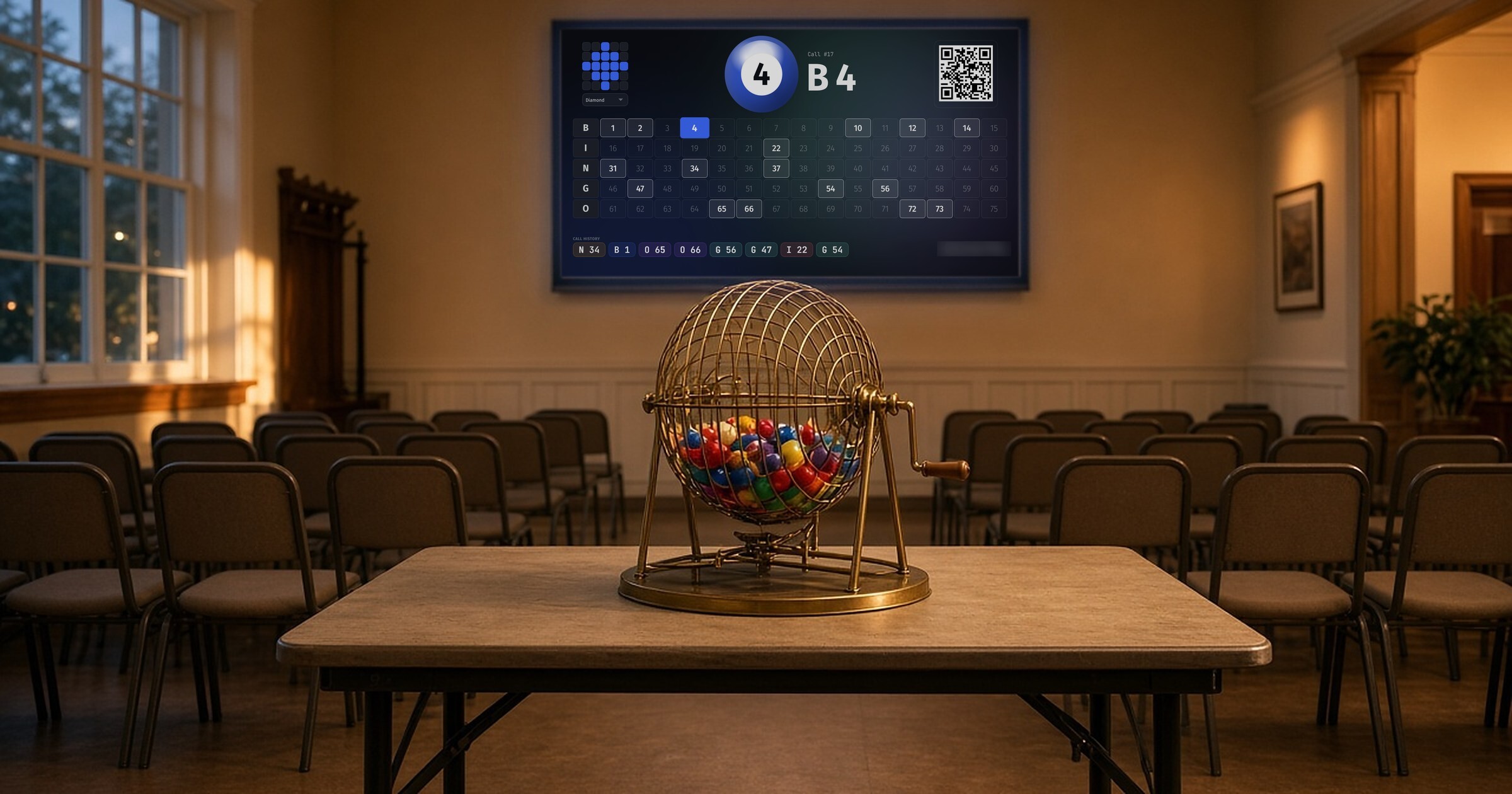
Cage or Screen? How to Run Charity Bingo With a Ball Cage and a Digital Board
Running charity bingo with a ball cage? See how to pair your cage or blower with a digital board so every player can follow each call, and what state rules say.
- Hosting Guides
Classroom Bingo Games: A Teacher's Guide to Review That Doesn't Feel Like Review
Turn review day into a game your class actually wants to play — classroom bingo formats, free tools, and how to wire it to any subject.
- Use Cases