How to Start a Weekly Bingo Night at Your VFW, Legion, Elks or Moose Lodge
- Hosting Guides
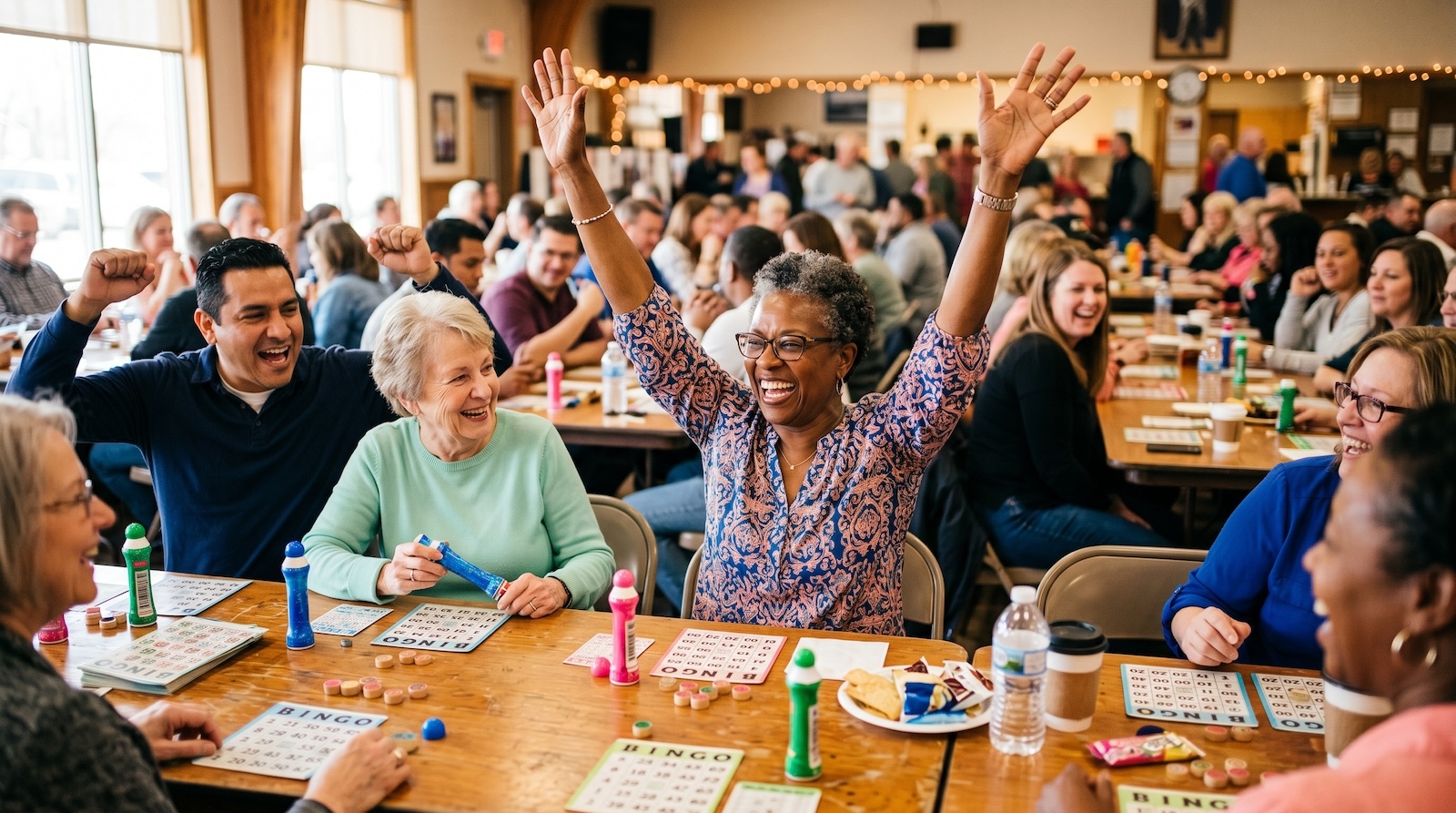
How do I start a weekly bingo night at our VFW post or lodge? Check your state's charity bingo rules and get any license you need first. Then pick a night and a game lineup, line up a few volunteers, and buy a cage, cards and daubers. Show the calls on the hall TV with a browser-based board so the back row can follow. Run the same lineup every week.
Last updated: Oct 2026. Not legal advice. Check your state's rules.
I've helped run a bingo fundraiser for Royal Family Kids for more than a decade. Every hall is different, but the back row asks the same thing: "What was that last number?" This guide covers the whole night, from rules to volunteers to the TV. It draws on the written rules of real posts and one state's law.
Do you need a license to run bingo at a VFW or Legion post?
Maybe. It depends on your state, so find out before you buy anything. States differ on who can run bingo, how often, who can work the game and what paperwork it takes.
Here's one example, Florida's bingo statute, section 849.0931:
- Who: it says nothing in the gambling chapter should "prohibit or prevent charitable, nonprofit, or veterans' organizations" from conducting bingo, provided "the entire proceeds derived from the conduct of such games, less actual business expenses for articles designed for and essential to the operation, conduct, and playing of bingo or instant bingo, are donated by such organizations to the endeavors mentioned above."
- How often: "the number of days per week during which organizations authorized under this section may conduct bingo shall not exceed two." Instant bingo is handled separately. One night a week sits under that line.
Florida is only one state, and other states will differ. Call your state's gaming or charitable-gaming office, tell them you're a post or lodge, and ask what you need before the first night. Get the answer in writing if you can.
Dauber HQ is a display tool. It isn't a license, and it doesn't make any game compliant or approved. That part is yours and your regulator's. If you need state reporting forms, Dauber HQ isn't that tool.
What do you need to start?
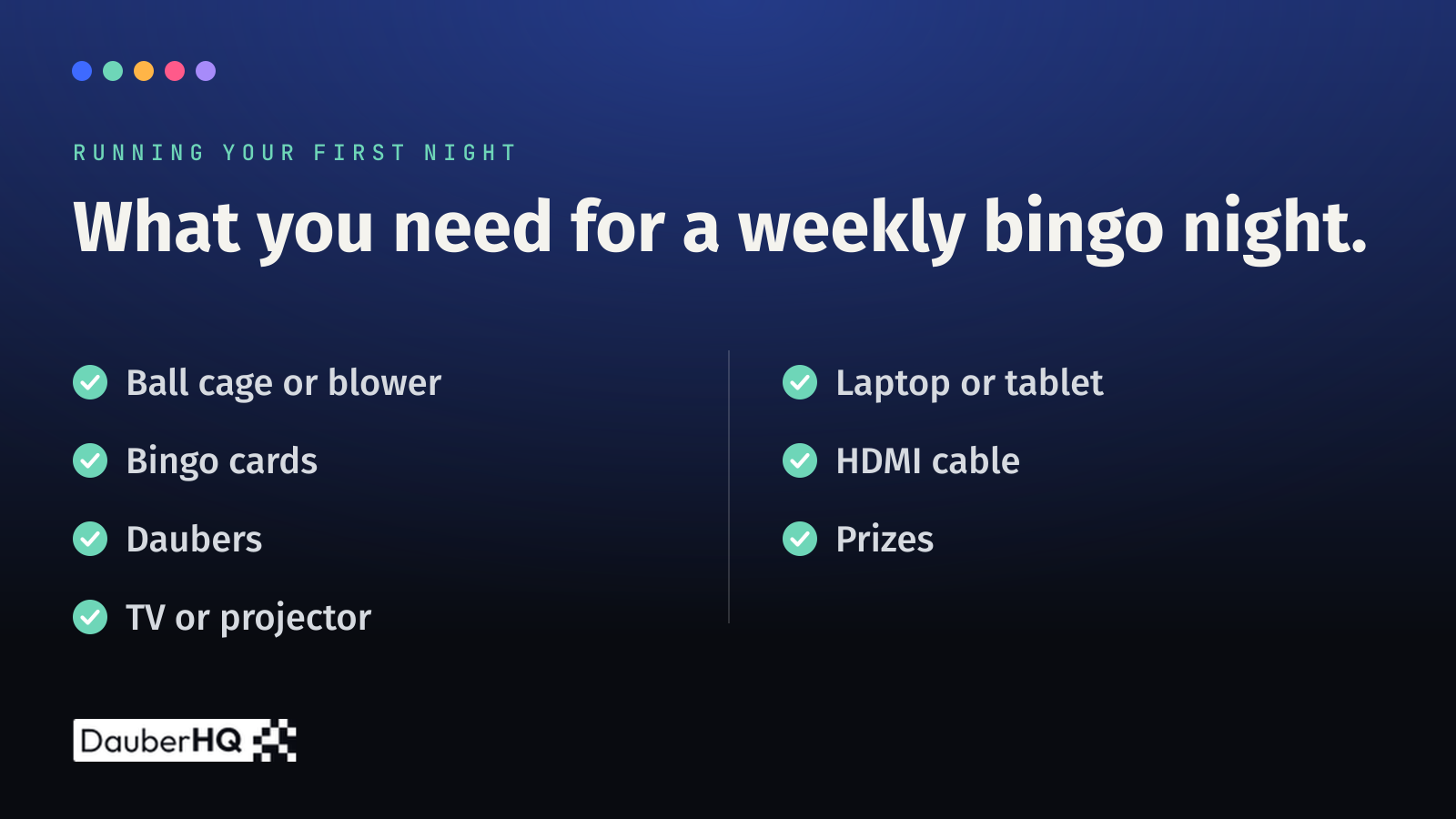
Short list. You may already own most of it:
- A cage or blower, with a full set of balls. Dauber HQ displays the draw. It doesn't replace the cage.
- Paper bingo cards. Players keep marking their own. Dauber HQ doesn't replace the card.
- Daubers.
- A TV, projector or monitor the whole hall can see.
- A laptop or tablet to run the display.
- An HDMI cable that reaches from the laptop to the TV.
- Prizes.
- A cash-handling plan. This one belongs to your post. Dauber HQ doesn't take bets or entry fees, sell cards or pay out prizes.
Before the first game, check the balls. One Florida VFW post's written bingo rules tell the caller to "Get bingo balls verified by a VFW member" before the games start.
How do you plan the night?
Start with the calendar. An American Legion post's fundraising planning chart says "you have to make sure the date is able to be scheduled with the bar manager ahead of time and on the calendar." If your hall has a bar, canteen or rental calendar, get on it before you announce anything.
Then settle the lineup:
- Night and start time. Pick one and keep it. The Florida VFW post's rules list games at 1:00 PM on Thursday and 2:00 PM on Sunday, so afternoon games happen too.
- How many games. Write the full list down before doors open.
- Patterns. Decide which pattern each game uses. Our bingo patterns guide shows the common ones.
- Breaks. Plan when the canteen gets its moment, and when an early game or an intermission fits.
Then tell people what's being played. The Florida post's rules say to "Display the next game on the board so everyone knows what they are playing." The Legion chart mentions a large board "that shows what kind of Bingos are being played at each game." If you want more on running the night itself, see how to run a bingo night.
Who does what?
You don't need a crowd of volunteers. You do need a few people with clear jobs, and one person can cover more than one:
- Caller: reads each ball out loud. In a small hall, this is often the person on the cage too.
- Cage and data entry: pulls the ball and enters it on the display.
- Floor checker: walks to whoever yells "Bingo!" and reads the card back against the called numbers.
- Cashier: handles the money, which stays outside Dauber HQ.
- Canteen: feeds everyone.
Real posts write these jobs down. The Florida VFW post's rules say "One member from the Bingo Committee must be present during all Bingo sessions," that the caller is "a VFW member, Auxiliary or General Member," and that "All money collected will be counted and then verified by 2 VFW members." Florida's statute adds two rules for volunteers: those who run the game "may not be compensated in any way for operation of such game," and "A caller in a bingo game may not be a participant in that bingo game." Check what your state says before you set the roster.
How do you train a new caller?
Sit them next to your best caller for a few weeks. Have them practice on the live demo before a real night, so the first time they enter a number isn't in front of the hall. Say each number out loud as you enter it, so everyone, including a player who isn't looking at the screen, hears it.
How do you show the numbers to the whole hall?
How do you show the numbers to the whole hall?
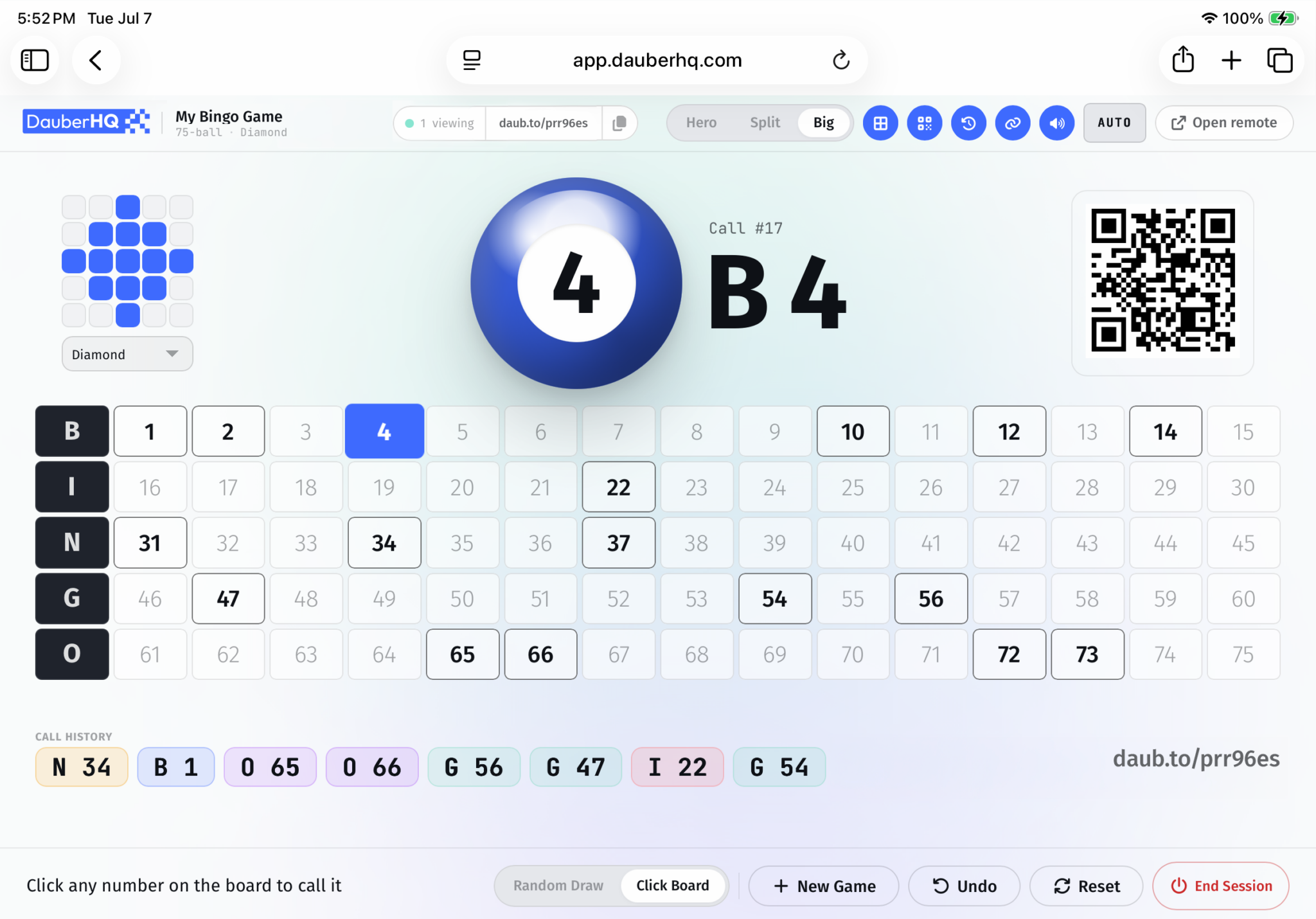
Dauber HQ runs in a web browser. The host calls the game from a laptop, tablet or phone, and the board goes up on the TV. Setting up the session and games is quick and easy. Your total time depends mostly on whether the TV or projector is already in place.
- Sign up and start a session. You pick 75 or 60 ball when you set it up.
- Open the remote display and put it on the TV, projector or monitor. It shows a large current ball and the full board. You can switch on recent calls, the QR code and the join URL, and choose the Hero, Split or Big layout. (Remote display help)
- Show the QR code for anyone who wants it on their phone. Players scan it and follow along. No app, no account. They still mark their own paper cards. (Do players need an app?)
- Draw from your cage, then enter each number. For paid or fundraising games, turn auto-draw off and click or tap each number by hand. (Auto-draw for paid events)
- Call it out loud, like always.
Numbers big enough to read from the back row. Every phone stays on the same call, from the first ball to the last.
Our help page says to steer away from auto-draw for paid or fundraising events, because some states require licensed bingo to use a physical draw like a ball cage. So the cage stays, and so does the call out loud. Your state may also have its own rules about how numbers are drawn and shown, so ask your regulator before you buy equipment. For more on pairing a cage with a screen, read Cage or Screen?.
How do you keep people coming back every week?
Keep it boring in the best way. Same night. Same start time. The same kind of lineup. Post the schedule where people will see it, on the hall calendar and by the door, and read tonight's games out before the first ball.
I can't promise a bigger turnout, and nobody honestly can. Regulars can plan around a night that never moves.
If you run Plus, you can save the lineup as a reusable game program, so you aren't rebuilding the same list each week. Free works fine too. You just set up the games each time.
What does it cost to run the display?
Free forever. Plus is $15 a month or $120 a year. No per-player fees. Ever.
- Free is $0, forever. It runs one session at a time and has a cap of 10 viewers. The caller screen doesn't count toward the 10, but each remote display does, so one TV counts as one viewer while it shows the board to the whole hall. On Free, the room follows the big screen and phones are the extra.
- Plus is $15 a month or $120 a year. It has unlimited viewers, so every phone in the hall can follow. It also runs multiple sessions at once, and adds reusable game programs, 75+ built-in patterns (or draw your own in seconds), and a timestamped call log you can export as CSV.
If one TV is how your hall follows the game, Free covers it. If you want every member's phone on the board, that's when Plus makes sense. See the pricing page for what each plan includes.
FAQ
How many volunteers do you need for post bingo? It depends on your hall and your state's rules. The written rules we found name a caller, a bingo committee member, someone to collect and pay out money, and two people to count it. Beyond that, a few volunteers is a fair start: a caller (who can also run the cage), a floor checker, someone on the money and someone in the canteen.
Can we use a TV instead of a flashboard? Yes, if your rules allow it. Open the remote display on any TV, projector or monitor and show it to the hall. Check with your state regulator first about how numbers must be drawn and shown.
Do members need an app? No. Anyone who wants the numbers on their phone can scan the QR code. No app, no account. They still mark their own cards. Your players stay anonymous.
Does Dauber HQ work in a hall? Yes. It runs in a web browser, for bingo played in person. The host calls the game from one screen, the numbers show on the hall TV, and players can follow on their phones from their seats. It isn't a way to play from home, and it doesn't take bets or handle money.
Does Dauber HQ replace the cage or the paper cards? No. You keep your cage or blower for the draw, and players keep marking their own cards. Dauber HQ displays the numbers. It doesn't check cards or pick winners.
What does it cost? Free forever for up to 10 viewers, and the TV counts as one. Plus is $15 a month or $120 a year with unlimited viewers. No per-player fees. Ever.
Sources
- Florida Statutes, section 849.0931, "Bingo authorized; conditions for conduct; permitted uses of proceeds; limitations," 2026 Florida Statutes, Florida Senate
- VFW Post 4534 (Rockledge, FL), "BINGO Rules", dated Sep 28, 2020 (text reads "Update 9.25.2020")
- American Legion Post 552, fundraising options chart, PDF created Jul 2023
- Dauber HQ support: the remote display; do players need an app?; auto-draw for paid or fundraising events; in-person bingo only; plan limits explained
- Dauber HQ Pricing
Keep the cage. Put the numbers where the whole hall can read them.
A bingo board that looks as good as the night you're putting on, and holds steady all night.
Start a Session, Free · See What Plus Adds
Free forever. Plus is $15 a month when the night grows. No per-player fees. Ever.
10% of profit goes back to kids in foster care.
Related posts
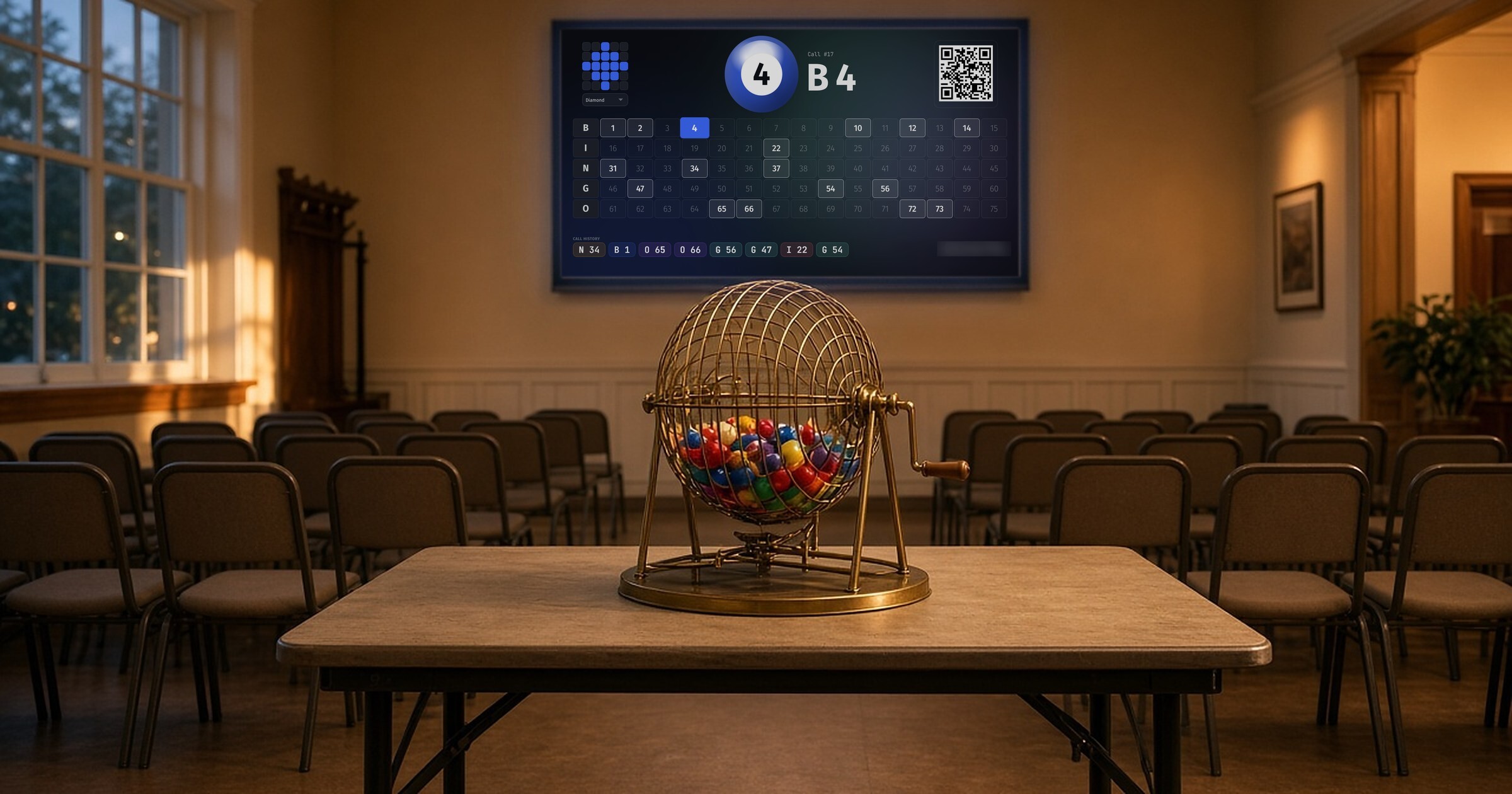
Cage or Screen? How to Run Charity Bingo With a Ball Cage and a Digital Board
Running charity bingo with a ball cage? See how to pair your cage or blower with a digital board so every player can follow each call, and what state rules say.
- Hosting Guides
Classroom Bingo Games: A Teacher's Guide to Review That Doesn't Feel Like Review
Turn review day into a game your class actually wants to play — classroom bingo formats, free tools, and how to wire it to any subject.
- Use Cases

75-ball or 60-ball? How to pick the right mode
The difference between 75-ball and 60-ball bingo, and how to pick the right one for your crowd, your patterns, and how much time you have.
- Games & Patterns