Classroom Bingo Games: A Teacher's Guide to Review That Doesn't Feel Like Review
- Use Cases
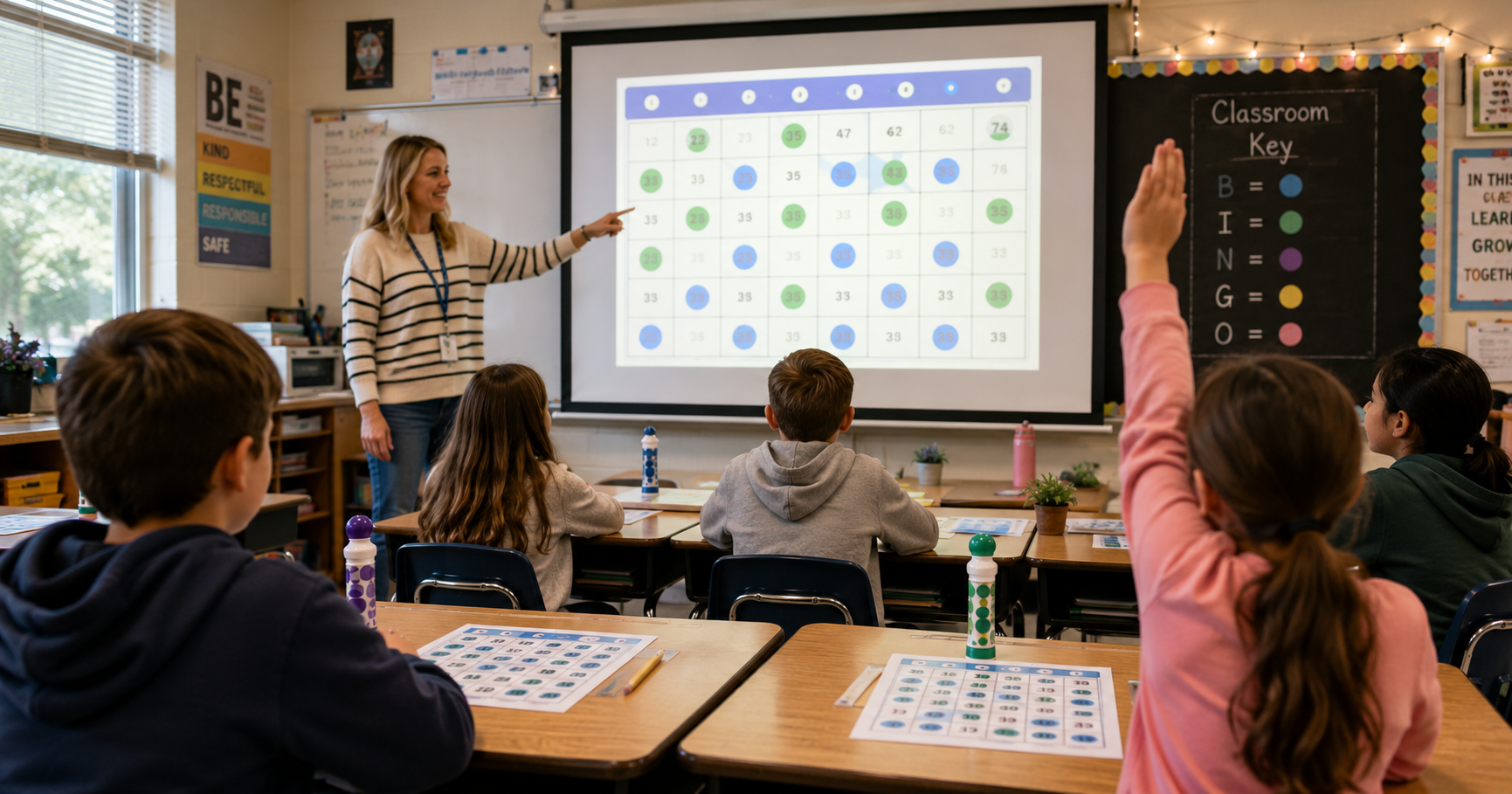
There is a particular silence that settles over a classroom when you say the word "review." Shoulders drop. Someone asks if it's for a grade. The energy you spent all week building leaks out under the door.
Bingo fixes that, and it's a little bit of a trick. The kids think they're playing a game. You know they're recalling vocabulary, drilling math facts, and arguing about whether "B-12" was already called. Both things are true at once, which is the whole point.
This guide is for the teacher who wants review day to land — the one running a Friday recap, a test-prep session, an end-of-unit cooldown, or a rainy-day backup when the lesson plan falls apart. We'll cover why bingo works, how to map it to any subject, and how to run the whole thing from your laptop and the classroom projector without printing a single new card.
Why bingo works as a review game
Bingo is built on retrieval, which happens to be one of the most reliable ways to move something into long-term memory. Every call asks the same quiet question: do you have this one? The student scans their card, checks, marks, and waits for the next. That scan-and-check loop is exactly the kind of low-stakes recall that good review is made of.
It also spreads the work out. In a typical review game, the three fastest hands answer everything and the rest of the room watches. Bingo gives every student their own card and their own pace. The kid who needs a beat longer to find "denominator" still gets to find it, because the game waits for the call, not for the quickest hand.
And it has a finish line. A round ends when someone fills the pattern, which means you control the length precisely. Five minutes, fifteen minutes, the last block before the bell — the game fits the time you have instead of running over it.
What you actually need
Less than you'd think.
- A set of cards. Either printed, or each student draws their own 5×5 grid and fills it from a word bank you put on the board. Having them build the card is itself a review pass, so don't skip it if you have the time.
- A way to call. This is the part that used to mean a cage of numbered balls or a stack of index cards. A free online bingo caller does it from your browser instead, and shows every call on the projector so nobody misses one.
- Markers. Dry beans, paper squares, or just a pencil. Anything they can take off again so the cards get reused next period.
That's the entire supply list. No app for students to download, no logins, no per-student accounts. If you've got a projector and a browser, you've got a bingo game.
Turning your lesson into a bingo round
Here's the move that makes classroom bingo more than a time-filler: the card holds the content, and the call points to it.
Most online callers — Dauber HQ included — call numbers, the classic B-I-N-G-O 1-to-75 setup. That's a feature, not a limitation, because a number is just a pointer. You decide what each number points to.
Vocabulary and spelling
Hand out (or have students build) a card of this week's terms. Make a numbered key for yourself: 1 is photosynthesis, 2 is erosion, and so on. When the caller draws B-12, you read the definition of term 12 out loud. Students who have that word on their card mark it. They're matching definition to term under a tiny bit of time pressure, which is the exact skill the quiz is going to ask for.
For spelling, call the number and say the word; they find it and check the spelling on their card before they mark it.
Math facts
Number each problem on a key. Call N-34, read "seven times eight," and the student finds the answer — 56 — on their card. You've turned a flashcard drill into a game where the whole class is computing at once instead of waiting their turn.
This works for fractions, conversions, order of operations, anything with a clean answer. The card carries the answers; your key carries the prompts.
Any subject with a list
States and capitals, historical dates, elements and symbols, Spanish vocabulary, parts of a cell. If the content fits on a card and has a clue you can read aloud, it fits in a bingo round. The numbered key is the bridge between a generic number caller and your specific lesson.
Setting it up with a free caller
The traditional version of this — a cage, a microphone, a host squinting at a ball — does not belong in a classroom of thirty Chromebooks. Here's the modern version, start to finish.
Open a free online caller like Dauber HQ in your browser and start a session. Put it up on the projector so the called-number board is visible from the back row. If your students have devices, share the join link or show the QR code on screen — each of them can follow the live board on their own Chromebook or phone, which cuts down on "what was the last one?" considerably. No download, no sign-up, nothing collected about a single student.
Then call as fast or as slow as the room needs. Draw automatically for a brisk game, or switch to manual and tap each number yourself so you've got time to read the matching clue from your key. When someone shouts the win, the board has a full log of every number called, so verifying a card takes about ten seconds instead of a debate.
The free plan covers a single board and up to ten viewer screens, which is plenty for putting the game on the projector. If every student wants the live board on their own device in a bigger class, that's the paid tier — but for most classroom review, the projector and the free plan do the job. (Full plan details live on the features page.)
Patterns that add a teaching twist
The winning pattern is the second lever you control, and it changes the math of the game.
- Single line is the fastest. Use it when you've got five minutes and want a quick burst of recall.
- Four corners keeps more of the board in play and runs a little longer.
- Blackout (the whole card) is the marathon — every term gets reviewed before anyone wins. Save it for a full test-prep session when coverage matters more than speed.
A nice trick: run a quick single-line round first to wake everyone up, then a blackout round where the real review happens. The first one is the hook; the second one is the lesson.
Running it without losing the room
A few things that separate a smooth game from a chaotic one:
Set the win condition out loud before you start. "We're playing one line, first to fill a row across, down, or diagonal." Write it on the board. Half of all bingo arguments are really disagreements about what counts as a win.
Read clues twice for anything tricky. You're not just calling, you're teaching. If half the room looks lost on a definition, that's a signal to slow down, not to move on.
Keep a prize that isn't a thing. Five minutes of choice time, first pick at the reading corner, the right to assign the line-up order. Classroom bingo runs better on small privileges than on candy, and your budget will thank you.
Have a tiebreaker ready. When two students hit the pattern on the same call — and they will — a quick "first to bring me the card" or a single bonus question settles it cleanly.
Keeping it fair, and keeping it fun
The fastest way to lose a class is a game that feels rigged. The called-number log helps here: when there's a dispute, you pull up the list of every number drawn and check the card against it, out in the open. No "I definitely called that," no hard feelings. The record decides.
The second-fastest way is a game that drags. If a round is running long with no winner, you can shift the pattern mid-game — announce that you're switching to four corners — and bring it home. Reading the room is the whole skill, and a flexible caller lets you act on it.
And let the personality in. The kid who has been waiting on a single number for four calls and finally gets it deserves the full theatrical groan-then-cheer. That tension is the fun. It's also, quietly, the recall working.
A few formats to steal
- Bell-ringer bingo. One quick line-round at the start of class on last lesson's terms. Five minutes, sets the tone, no prep beyond your key.
- Stations bingo. Small groups, one caller per group on a tablet, same word bank. Good for centers and for classes that get loud.
- Student-caller bingo. Let a student run the caller and read the clues. They have to know the material cold to do it, which makes "caller" the most-studied job in the room.
- Cumulative review bingo. Build the card from the whole unit, not just this week. Blackout pattern. This is your test-prep day in disguise.
The honest version of the pitch
Classroom bingo isn't magic. It won't teach a concept they've never seen, and it's not a substitute for the actual lesson. What it is good at is the second look — the recall, the drill, the "do you still have this" — wrapped in enough fun that the class forgets to dread it.
The tools have caught up, too. You don't need a cage, a class set of pre-printed cards, or a budget. A free browser-based caller on the projector, a numbered key you wrote in five minutes, and cards the students built themselves will get you a review game that the back row can actually see and the whole room actually wants to play.
That's the entire trick. They think it's a game. You know it's review. Both are true, and on a Friday afternoon, that's a small miracle.
Dauber HQ is a free online bingo caller built for community hosts — and, it turns out, for teachers who've discovered that review goes down easier with a daub. No app and no student logins required.
Running bingo outside the classroom too? See our complete guide to running a bingo night or the full pattern library for more ways to mix up a round.
Related posts
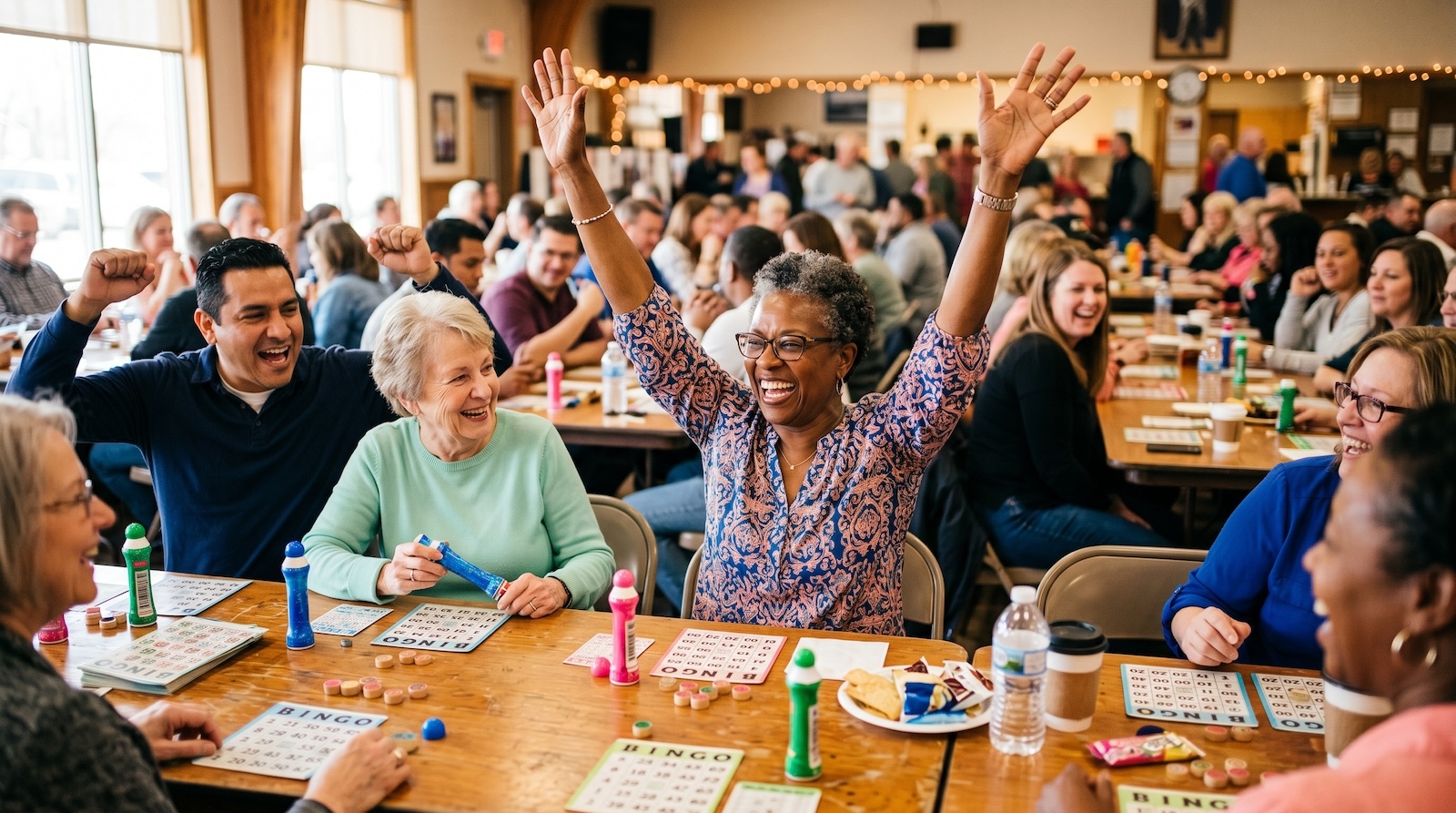
How to Start a Weekly Bingo Night at Your VFW, Legion, Elks or Moose Lodge
A practical guide to weekly bingo at your VFW post, American Legion, or lodge: supplies, volunteers, calling the numbers, and a display the whole hall can read.
- Hosting Guides
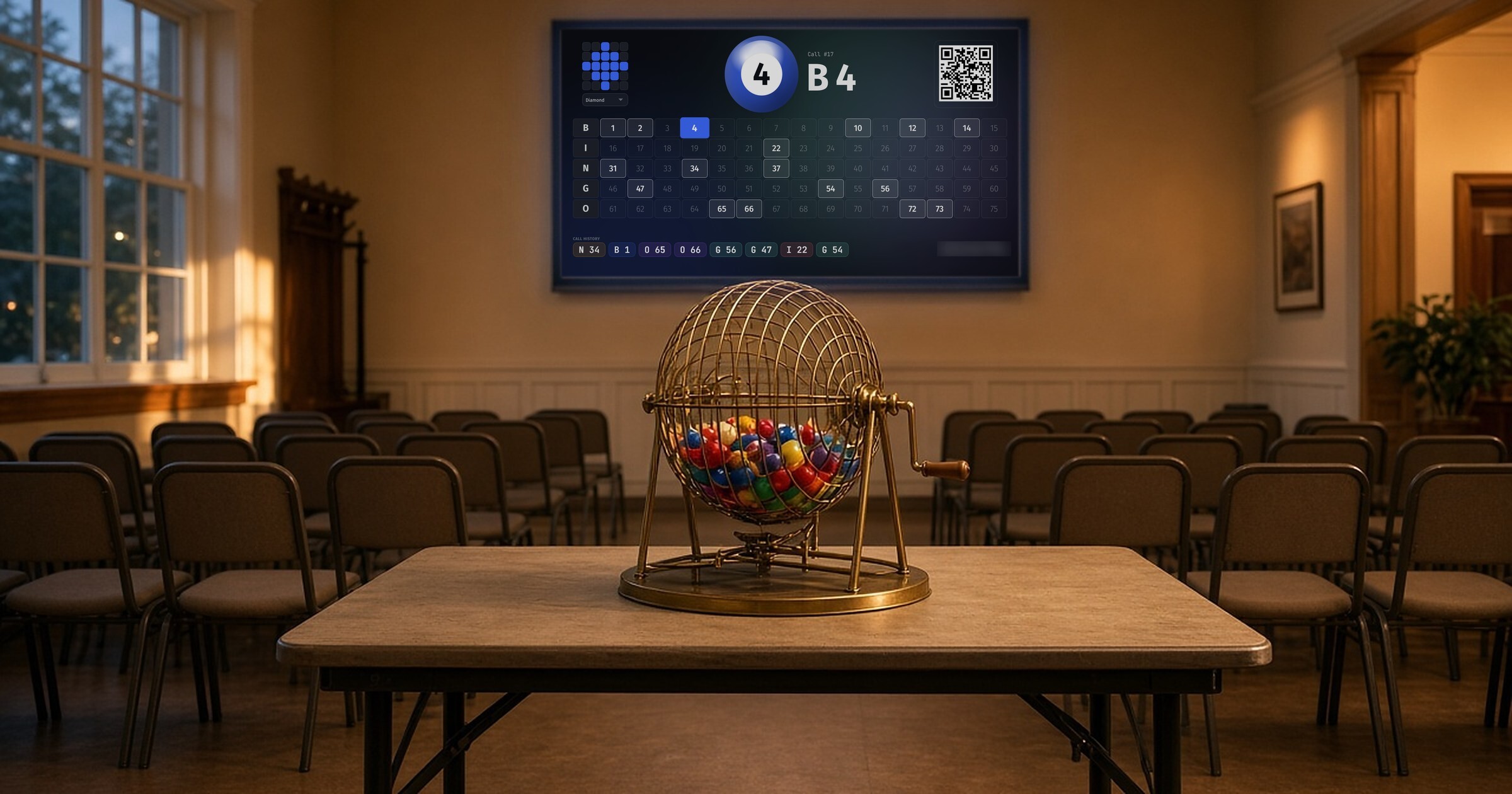
Cage or Screen? How to Run Charity Bingo With a Ball Cage and a Digital Board
Running charity bingo with a ball cage? See how to pair your cage or blower with a digital board so every player can follow each call, and what state rules say.
- Hosting Guides

75-ball or 60-ball? How to pick the right mode
The difference between 75-ball and 60-ball bingo, and how to pick the right one for your crowd, your patterns, and how much time you have.
- Games & Patterns