How to Run a Church or Charity Bingo Fundraiser That Actually Raises Money
- Fundraising

Bingo fundraisers have been funding church basements, VFW posts, and community organizations for decades. There's a reason: they're low-cost to run, endlessly repeatable, and genuinely fun for participants. A well-run bingo night can raise anywhere from a few hundred to a few thousand dollars in a single evening, depending on your crowd size and ticket structure.
The difference between a bingo night that raises real money and one that barely covers the prize cost usually comes down to three things: how you structure the event, how you set your pricing, and how smoothly the night actually runs. This guide covers all three.
A note on where this comes from: Dauber HQ was built by Seth Burnett, who spent 15 years helping to run bingo fundraisers for Royal Family Kids — a non-profit serving kids in the foster care system. The product exists because the available software was awful and the fundraiser kept growing. Some of what's in this guide comes directly from that experience.
Is a Bingo Fundraiser Right for Your Organization?
Bingo fundraisers work best when:
- You have a natural community of potential attendees (congregation, post members, neighborhood association)
- Your state or municipality allows charitable bingo gaming (most do — check with your state's gaming or charitable gaming authority)
- You can run the event in a space that holds at least 20–50+ people comfortably
- You have a few reliable volunteers to help with setup, card distribution, and prizes
They're a poor fit if your community doesn't have a natural gathering space, if gaming regulations in your area make it complicated, or if you're expecting a one-and-done event — bingo fundraisers compound in value when they're held regularly.
Legal Basics (Check These Before You Plan)
Most states allow charitable organizations to run bingo events, but the rules vary. Common requirements:
- The organization must be a registered nonprofit or charitable organization
- A license or permit may be required (often inexpensive or free for nonprofits)
- Net proceeds must go to the charitable purpose
- Some states restrict who can serve as the bingo caller or manage the event
Search "[your state] charitable bingo license" or check with your state's gaming control board before planning your first event. This sounds more complicated than it is — most community organizations are already in compliance without realizing it.
Setting Up Your Fundraiser for Maximum Revenue
The admission + prize model
The simplest structure: charge admission at the door and use a portion for prizes. The remainder is your proceeds.
Example: 50 attendees × $15 admission = $750. Set aside $250 for prizes. Net proceeds: $500.
Adjustments: Admission price depends on your community and what the market will bear. VFW and church bingo nights often run $10–$25 per person, depending on how many games are included and the prize value.
The card sales model
Lower or free admission; players buy cards per game. A single bingo card per game might cost $1–$3. Players who want more chances buy more cards (up to 4 per game is a common limit).
Why this works: It rewards engagement and self-selects for more committed players. The math can work out to more revenue than flat admission, especially if your regulars tend to buy multiple cards.
Example: 40 players, average 2 cards each, $2/card, 8 games = 40 × 2 × $2 × 8 = $1,280 in card revenue. Set aside 30% for prizes ($384). Net proceeds: $896.
Combined model
Charge admission (covers basics) and also sell cards per game for extra chances. Most profitable structure for regular events with engaged, returning attendees.
Planning Your Game Night
How many games?
A typical bingo fundraiser runs 6–10 games in an evening. A common structure:
- Quick opener (single line or four corners — fast, easy, low prize)
- 3–4 mid-session games (variety of patterns, moderate prizes)
- Intermission (15–20 minutes — great time to sell raffle tickets, refreshments, or door prizes)
- 2–3 post-intermission games (building tension, larger prizes)
- Grand finale (full house / blackout — biggest prize of the night)
The finale matters. It's what people remember and what makes them come back. Make it worth it.
Patterns to use
Don't run the same pattern all night. Variety keeps the experience interesting, especially for returning attendees. A strong progression for a fundraiser:
- Game 1: Single line (any direction) — fast, accessible, low prize
- Game 2: Four corners — fast, different feel
- Game 3: Letter T — moderate length
- Game 4: Double bingo — medium length
- Game 5: Frame (outer border) — longer, more satisfying
- Game 6–7: Repeat of audience favorites, voted on mid-session
- Game 8 (finale): Full house / blackout — biggest prize, full tension
Prizes
The prize doesn't have to be cash — and often isn't, especially for church and community events. Common options:
- Cash (always popular)
- Gift cards to local businesses (great for sponsor outreach)
- Donated items from local businesses or congregation members
- Themed baskets (wine basket, spa basket, coffee basket, restaurant gift cards)
- Something personally meaningful to your community
For the finale prize: go big enough that it's the talk of the room. A $100–$200 prize for a blackout game at a charity event is standard and feels like a real win.
Sponsor the prizes: Before the event, ask local businesses to donate prizes in exchange for recognition at the event ("Tonight's blackout prize is sponsored by [Local Business Name]"). This gets your prize budget close to zero while giving sponsors visibility in the room.
The Night of the Event
Arrival and setup
Plan to have your space set up 45–60 minutes before doors open. Setup checklist:
- Tables and chairs arranged (allow enough space for players to manage multiple cards)
- Card distribution station ready (physical bingo cards for all players)
- Dauber HQ viewer QR code displayed prominently — players scan it so they can follow called numbers on their own device
- Prize table visible and labeled
- Caller station with screen, caller interface (or cage)
- A second display or TV showing the flashboard if your room is large
Volunteer roles
You need at least three people:
- The caller — runs the bingo interface, announces numbers, manages game flow
- Door and admission — collects admission, sells cards, answers questions
- Floor runner — distributes materials, verifies BINGO claims, manages energy in the room
For larger events (50+ players), add a second floor runner.
Running the games
Start on time. Announce the pattern and prize before each game begins. Call clearly and at a steady pace — not too fast. Give players a moment to mark their boards between calls.
When you're calling digitally and players are following along on their own device, your pace can be slightly faster — they can see every call on their screen without waiting to hear it clearly. Pay attention to the room — if people look confused or frustrated, slow down.
Managing intermission
A 15–20 minute break halfway through keeps energy up. Use it to:
- Sell refreshments (a significant additional revenue stream for many events)
- Run a raffle or door prize drawing
- Announce the total raised so far (even a rough number builds momentum)
- Let people stretch, socialize, recharge
Using a Digital Caller for Your Fundraiser
Running a bingo fundraiser traditionally means one main display board that players across a large room may struggle to see or hear. The back row misses calls. People ask their neighbors. It disrupts the pace.
The digital alternative: players scan a QR code when they arrive (or open a link on their phone), and the full called-numbers display opens on their screen — updated live as you call numbers. Every player can see every call on their own device, regardless of where they're sitting. They still play with their own bingo cards; they just never have to miss a call. When someone calls BINGO, you can verify against your timestamped call log in seconds.
Dauber HQ is a free browser-based bingo caller built for exactly this setup. You call from your laptop or tablet. Players follow along on their phones. The free tier handles up to 10 simultaneous viewers. Plus is $15/month (or $120/year) and removes the viewer cap — no per-player fees, ever. Full plan details live on the features page.
The display screen — a second link the app gives you, made to open on any TV in the room — projects called numbers large enough for the back row to read without squinting at a distant screen.
For what it's worth: Dauber HQ was built specifically because its founder needed it for a Royal Family Kids fundraiser that outgrew its venue. 10% of Dauber HQ's profit still goes back to that organization. Free forever means free forever — no trial, no expiration.
→ Set up your first session at Dauber HQ — it's free →
Marketing Your Fundraiser
For a regular fundraiser event to grow, you need people who weren't there last time to show up next time.
Within your organization:
- Email blast to membership or congregation
- Bulletin/newsletter announcement
- Personal ask from leaders ("Father O'Brien is coming" goes further than "bingo night announced")
Beyond your organization:
- Post in local Facebook groups (community pages, neighborhood groups)
- Flyers at local businesses
- Community calendar listings (most local newspapers and community sites have free listings)
- Nextdoor
Repeat attendees are your best marketing: Make the first event great, and they'll bring friends the next time. Announce the date of your next event at the end of the current one while energy is still high.
Running a Regular Schedule
One-off bingo fundraisers raise money. Regular bingo fundraisers build a reliable revenue stream.
For a monthly event with 40 attendees and $15 admission, using 30% for prizes: $500/month in net proceeds, or $6,000/year. For a weekly event: significantly more.
The compounding effect of regularity:
- Returning players bring new players
- Word of mouth accumulates over time
- Your operation gets more efficient as your team gets better at running it
- The event becomes part of your community's rhythm — something people plan around
Quick Reference: Bingo Fundraiser Checklist
Planning (2–4 weeks out):
- Confirm licensing/permit requirements in your state
- Book your venue or confirm your space
- Set admission price and game structure
- Confirm prizes (cash, donated, sponsored)
- Assign volunteers (caller, door, floor runner)
- Set up your bingo caller (digital or physical)
- Promote: email, social, bulletin, flyers
Day before:
- Confirm volunteers are available
- Print any materials needed (admission tickets, programs, physical cards if not going digital)
- Confirm prizes are secured
- Test your caller setup (software, display screen, audio)
Day of:
- Set up space at least 1-4 hoursearly
- Brief volunteers on their roles
- Have a refreshments setup ready for intermission
- Start on time
- End well — announce your next event date
Running bingo for your church, VFW, or charity? Dauber HQ is a free caller built for exactly this. Start for free → — and 10% of profits goes back to kids in foster care.
For the mechanics of running the night itself — pacing, patterns, and handling a BINGO claim — see our complete guide to running a bingo night.
Related posts
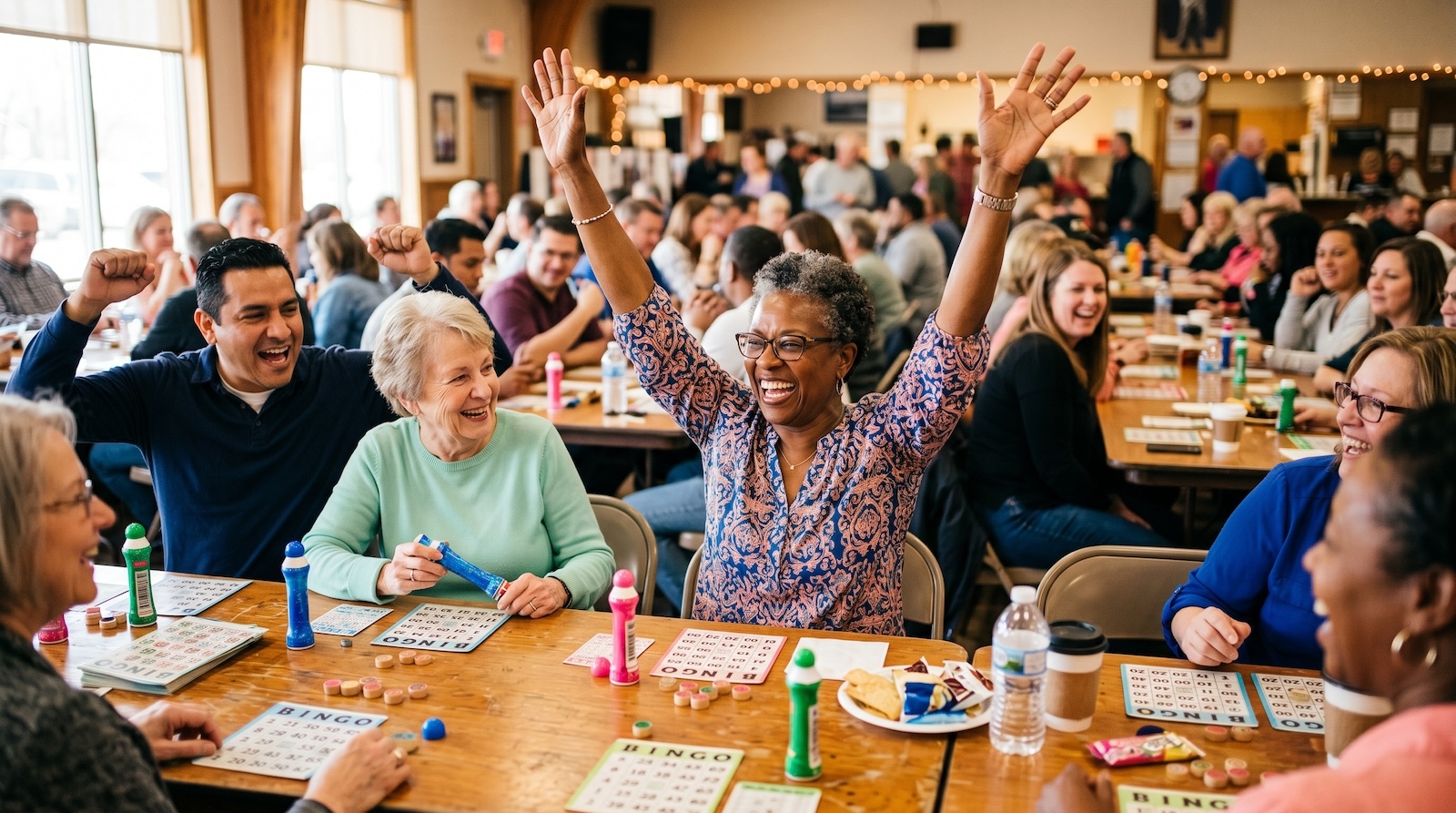
How to Start a Weekly Bingo Night at Your VFW, Legion, Elks or Moose Lodge
A practical guide to weekly bingo at your VFW post, American Legion, or lodge: supplies, volunteers, calling the numbers, and a display the whole hall can read.
- Hosting Guides
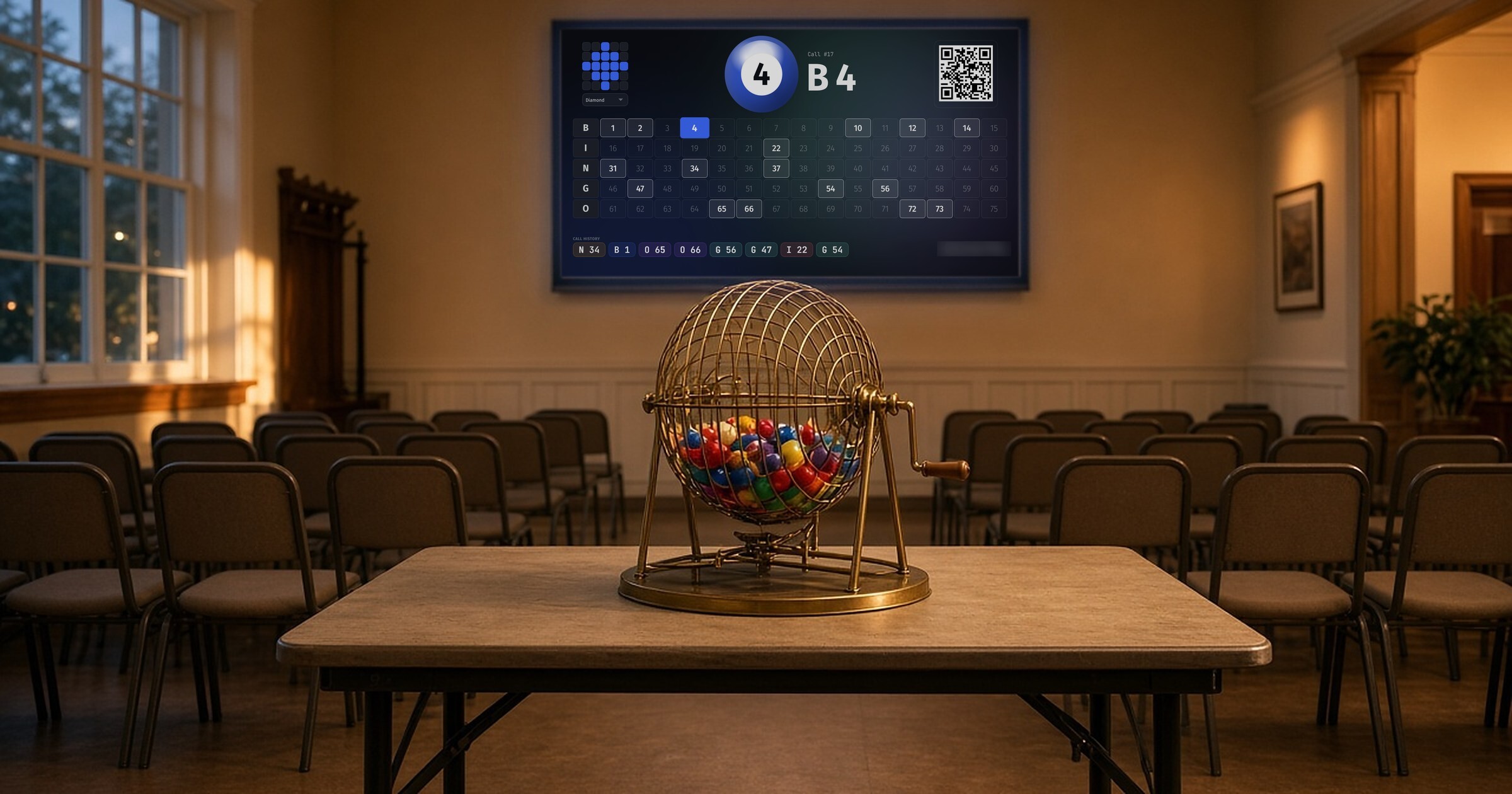
Cage or Screen? How to Run Charity Bingo With a Ball Cage and a Digital Board
Running charity bingo with a ball cage? See how to pair your cage or blower with a digital board so every player can follow each call, and what state rules say.
- Hosting Guides
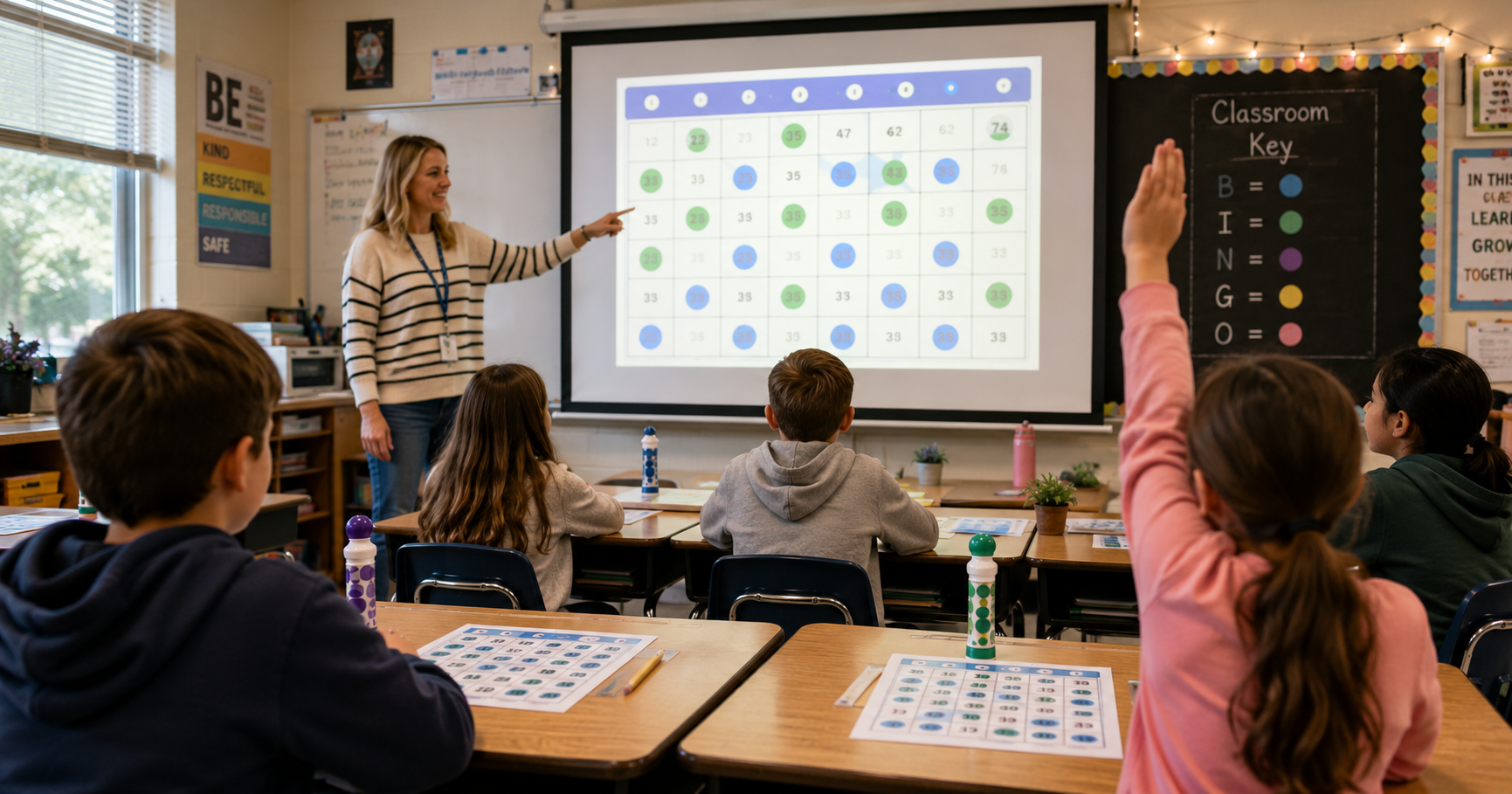
Classroom Bingo Games: A Teacher's Guide to Review That Doesn't Feel Like Review
Turn review day into a game your class actually wants to play — classroom bingo formats, free tools, and how to wire it to any subject.
- Use Cases